Tigers are the biggest of all the world’s big cats, measuring up to 3.3 metres in length and weighing up to 320kg. You’d think with all that muscle they would find it impossible to be quiet, but the truth is a tiger can creep around as quietly as a mouse. In fact, it relies on moving about noiselessly because it is an ambush predator, which means it slowly sneaks up on prey, following it for perhaps 20 or 30 minutes before attacking. But how exactly do tigers manage to get around without making a sound? Let’s find out.
Padded paws
Tigers have special soft, flexible pads on their paws that absorb sound and act as mufflers. The pads allow the animal to move over twigs and dry leaves so quietly that its prey doesn’t notice it. Tigers also instinctively shift their weight as they lift a paw, which helps them to control their steps in a way that minimises noise.
Direct register
Tigers have a particular way of walking that helps them to travel around quietly. ‘Direct register’ is a type of gait where the animal’s back paw steps directly into the footprint it made with its front paw. This means it makes fewer tracks and can move quickly and efficiently without making a noise. Tigers also walk on their toes, meaning less of the foot is in contact with the ground and it’s easier to move quietly - just like when you walk on your tiptoes.
Diagonal pace
If an animal has a diagonal pace, it means it moves both of the paws on one side of its body before moving those on the other side. This way of moving contributes to a tiger’s ability to walk silently, allowing it to keep its body relatively still.
Retractable claws
If you’ve ever heard a dog walk across a solid floor, you’ll have noticed the clicking noise their claws make. Tigers don’t have this problem; they can draw back their claws under a protective layer of skin, meaning they can stalk silently through the forest as they track their prey.
Low centre of gravity
When a tiger needs to move super silently to stalk its prey, it will crouch low to the ground, bringing its centre of gravity lower. This gives it more control over its movements, reducing the force exerted on the ground and improving stability.
See The Tiger Who Came to Tea
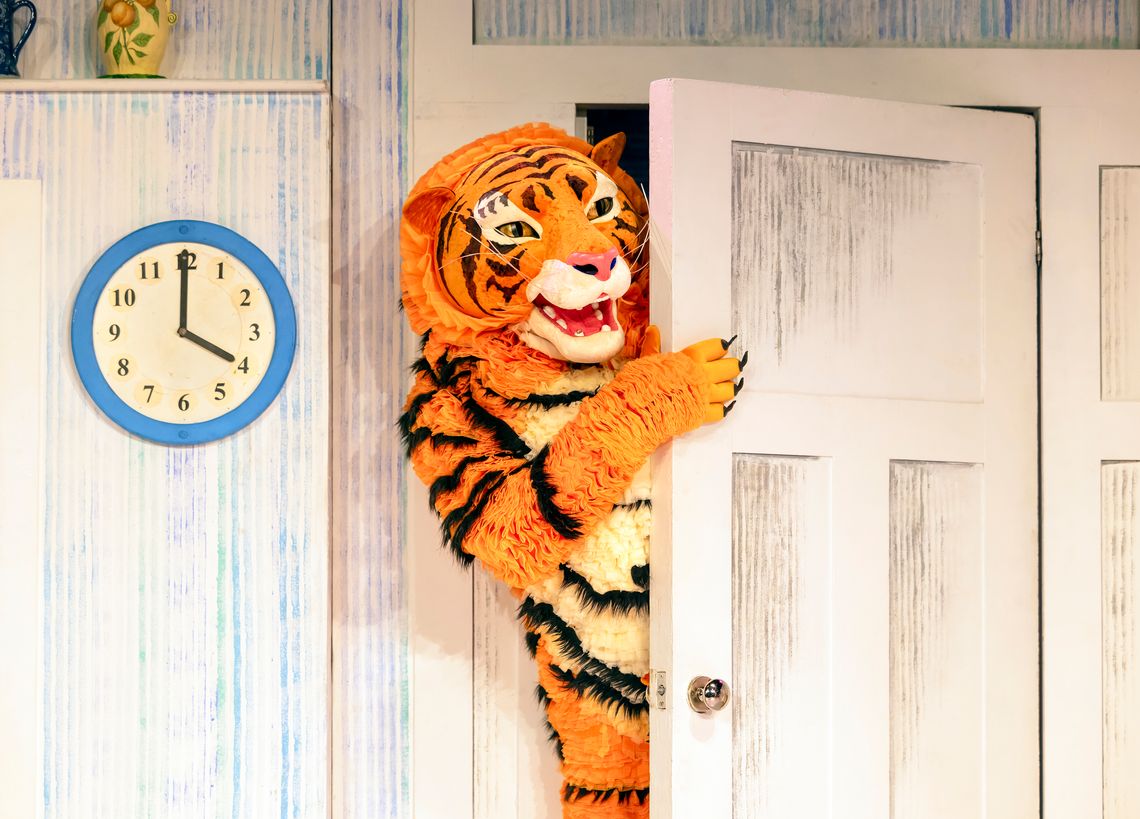
One tiger who doesn’t have to worry about creeping up on his prey is the tiger in The Tiger Who Came to Tea. When he arrives at Sophie’s house, he simply eats all the food he’s offered before starting on what’s in the cupboards! You can join him this summer as the show tours the UK - search ‘children’s theatre near me’ or ‘family theatre near me’ to find out if it’s playing at your local venue - or check out performance dates on our homepage and book theatre tickets for children's shows via the link.
The web browser you are using is too old to view this site. Please update your browser or use the current version of Microsoft Edge, Firefox, Chrome or Safari. Thank you!