Talk to the tail: The secret language of tiger communication
Most of us know that tigers have a very loud roar that can be heard up to two miles away by humans (and much further by other tigers due to their infrasonic tones). But did you know that these majestic cats also use another form of communication? Tigers, along with other cats, can talk with their tails. In fact, watching tail movements can give you a pretty good idea of how they’re feeling. Let’s explore this in more detail.
Tail talk
As the world’s largest cats, tigers have tails that reach 1-2 metres in length. This means they can be very expressive with them, and watching the way a tiger holds and moves its tail can tell us a lot about its emotional state and intentions. Here are some of the tail signals you can look out for:
Hanging loose: If the tail is hanging down loosely the tiger is relaxed and calm.
High and softly swishing: If the tail is held high and swishing softly, the tiger is feeling confident, curious and interested in being social. It’s open to other tigers approaching and interacting.
Fast flicks: If the tail is flicking or swishing sharply from side to side, the tiger is feeling aggressive or irritable. This is a warning signal, telling others to stay away, particularly if the ears are twisted back too.
Twitchy tip: If the tip of the tail is twitching, it usually means the tiger is very focused or a little frustrated. It’s a signal to be wary. You may see this kind of movement when a tiger is hunting.
Playful flick: A playful flick or two of the tail combined with the ears forward suggests the tiger is in a cheeky mood and will respond to interaction from other tigers.
Low and twitching: A low tail that’s twitching left to right means the tiger is scared or nervous.
Lashes: If a tiger in captivity is lashing its tail and using a defensive posture, it can mean the animal is feeling uncomfortable or frustrated.
Bonding
Tigers also use their tails to bond. Mothers and cubs or mating pairs will sometimes entwine their tails to signal affection. They may also rub the base of their tails against familiar companions or objects, transferring their scent onto them.
A tiger who talks
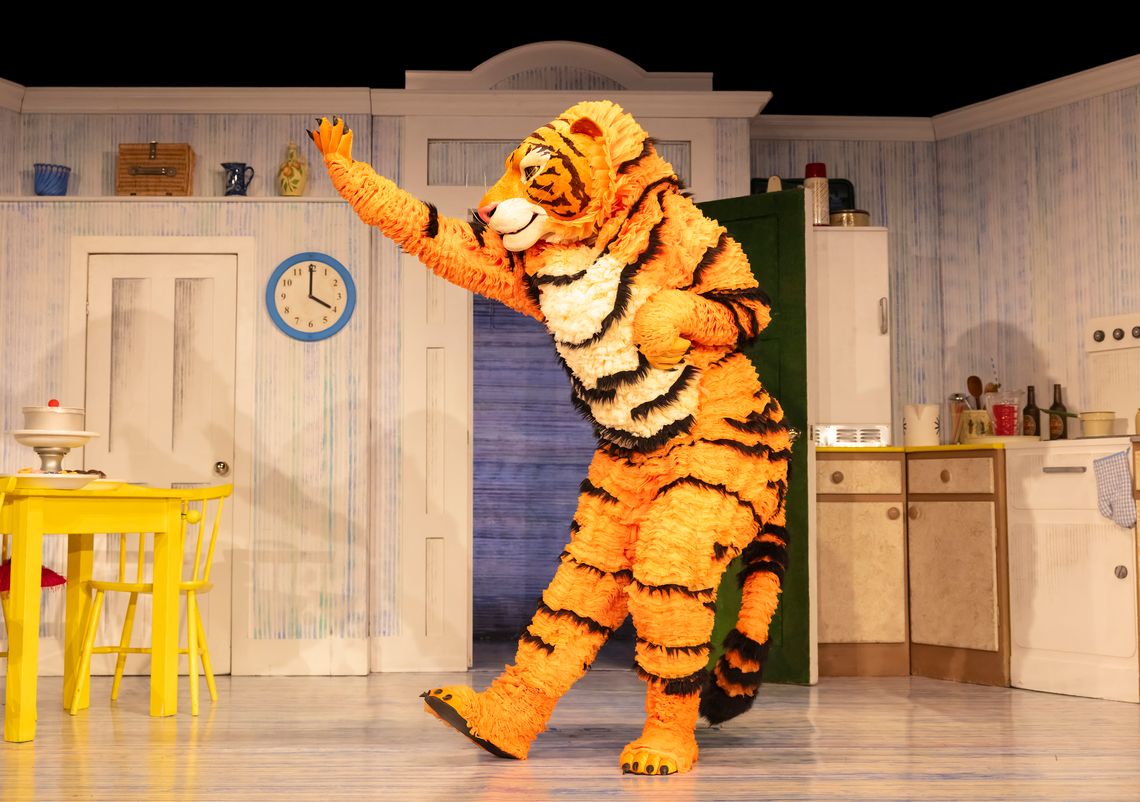
One tiger who doesn’t need to use his tail for communication is the tiger who visits Sophie’s house for tea - he can talk just like us! If you’re a fan of Judith Kerr’s timeless story, don’t miss The Tiger Who Came to Tea theatre show in Londonthis summer. Playing at the Theatre Royal Haymarket from 22 June - 5 September 2026, it’s one of the best theatre shows for under 5s, being packed with songs, dancing and interactive moments. Search ‘theatre for preschoolers’ and book your tickets today to join the fun.
The web browser you are using is too old to view this site. Please update your browser or use the current version of Microsoft Edge, Firefox, Chrome or Safari. Thank you!